Prompting is the basic skill of generative AI, and the only way to learn it is to get your hands dirty.
The prompt you type is the tip of an iceberg. Behind it sit the training data, the system prompt the company wrote, your custom instructions and any memory the tool keeps. You only see your part. So the part you control should carry as much structure as you can give it. I teach a four-part blueprint:
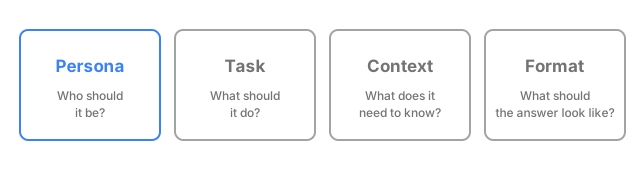
- Persona: the role the model should take, which sets tone and depth.
- Task: what it should do.
- Context: the background, conditions and specifics that matter.
- Format: what the output should look like, how long, and what it must include.
"Write something about using AI in education" is a weak prompt. A strong one says: you are a teaching assistant who specialises in educational technology; create a lesson plan for teaching algebra to high school students with AI tools; include objectives, materials, activities and assessment. Reasoning models do some of this expansion for you, but they still answer better with structure. Tell it what good output looks like and what it should not do.
Set up custom instructions once, so every chat starts from who you are and how you want answers. Mine ask the model to skip the niceties, treat me as an expert, offer contrary views and leave out moral lectures. And when a conversation goes the wrong way, edit an earlier prompt instead of arguing. The chat branches from that point.
Two habits matter as much as the blueprint. First, compare models. Run the same prompt through ChatGPT, Claude and Gemini, or through two image models, and use one to fact-check the other. You learn what each one is good at. Second, ask follow-up questions. The models know far more than we do, and the easiest way to get at it is to ask. My favourites:
- What else should I know?
- What is missing?
- What would an opposing view say?
- What are the limits of this information, and how current is it?
- Can you give examples, or explain it differently?
- Check my biases.
"What else should I know?" at the end of a conversation pays off nine times out of ten.
Try this
Ask a model a vague, high-level question. Then ask it again with a persona, a task, context and a format. Compare the two answers. Then write your custom instructions.
Since 2024
Reasoning models and agents now do more of the structuring themselves, so the blueprint matters less for short questions. It matters more for long work: what you put in front of the model, which files, which examples, which goal, decides most of what comes back.