In May I ran a workshop at Future Days, the House of Beautiful Business gathering in Athens, together with C3 Labs, a lab for cross-sector collaboration on global challenges. The question was simple to ask and hard to answer: of everything this community has talked about, what does it actually want to act on?
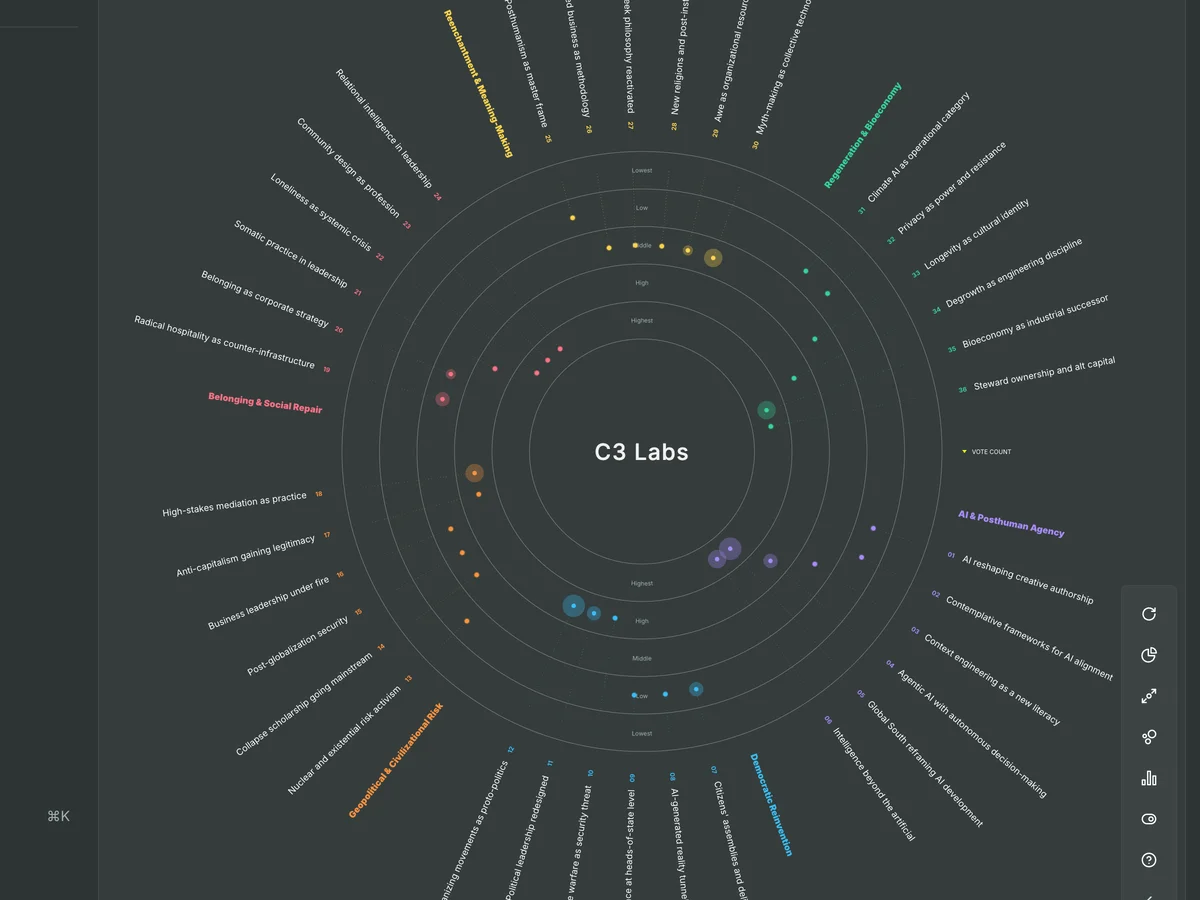
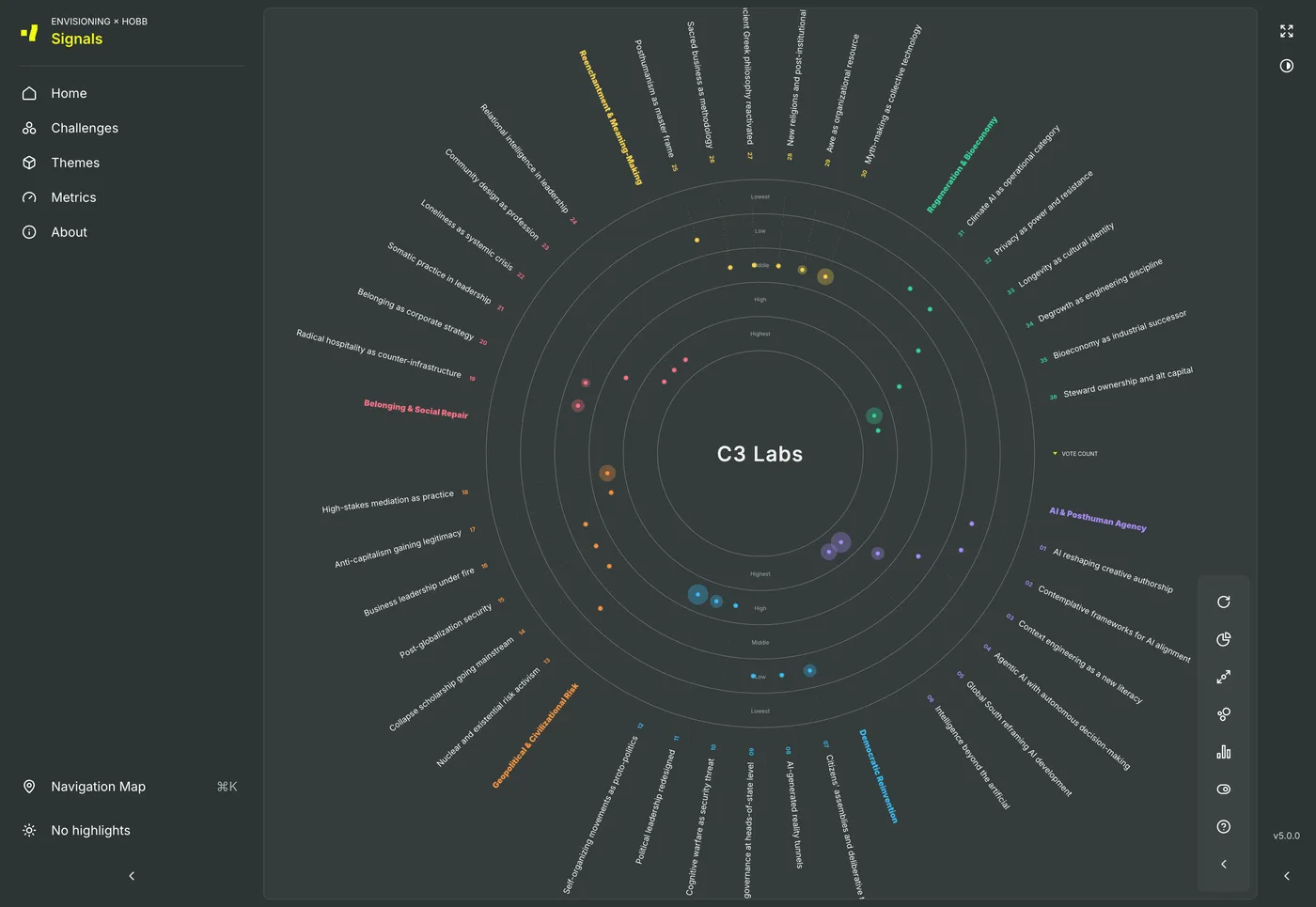
The House has hosted more than 120 festival sessions over the years. Before Athens, we used AI to read all of them and distil six themes, each with six global challenges: 36 in total, from Democratic Reinvention to Regeneration and Bioeconomy.
Two kinds of evidence
The workshop combined two signals.
Before the event, anyone could vote anonymously on the challenges that mattered to them, with no sign-up. 62 people cast 590 votes.
In the room, on Saturday 9 May, six breakout groups each discussed their theme and recorded the conversation as a WhatsApp voice note. We transcribed the recordings, and a language model pulled out the key phrases and mapped each one to a challenge. That gave us 56 anonymous quotes, attached to the challenges they were about.
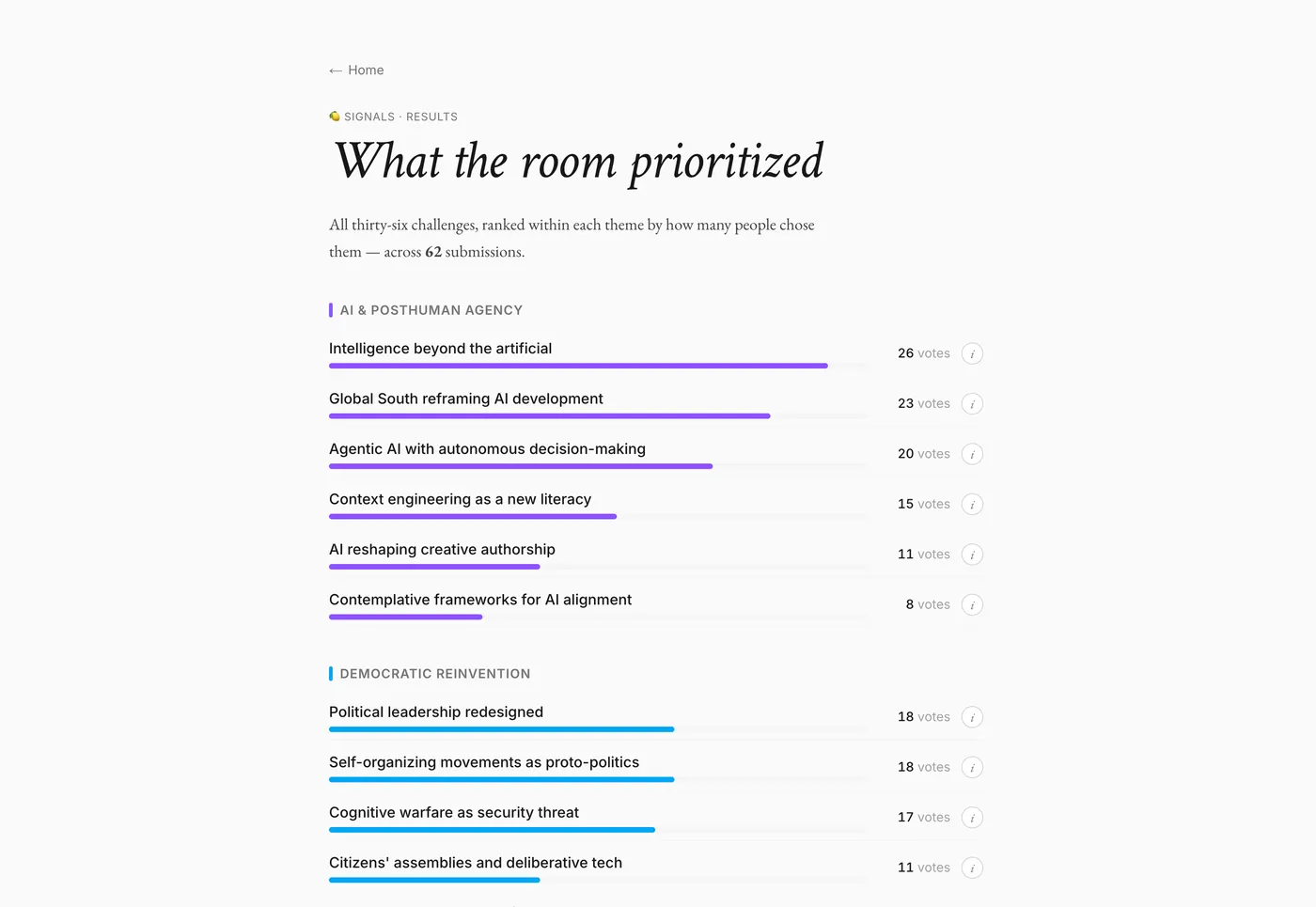
The two signals mostly agreed. The challenges people voted for were also the ones they talked about most. The top of the list was relational intelligence in leadership, the bioeconomy as the successor to extractive industry, intelligence beyond the artificial, and the Global South reframing how AI gets developed. One group proposed giving nature, and children, a seat at the board table.
The session was oversubscribed, and at the debrief we agreed the format worked, despite some friction with the tools.
What the room taught us
At a follow-up roundtable with the House's founders and partners, the sharpest critique was about the method itself. AI sensemaking is good at finding the centre of a conversation and bad at keeping its edges. It can average away the one outlier that would have changed the room. Participants also named what was missing: AI-driven job loss, social protection and who pays for the transition.
I take that seriously. A tool like this should surface the strange remark as readily as the popular one, and that is the part I most want to improve.
The results, the radar and the quotes are still online at hobb.envisioning.com, and the work now feeds a fellowship that C3 Labs and the House are designing together.