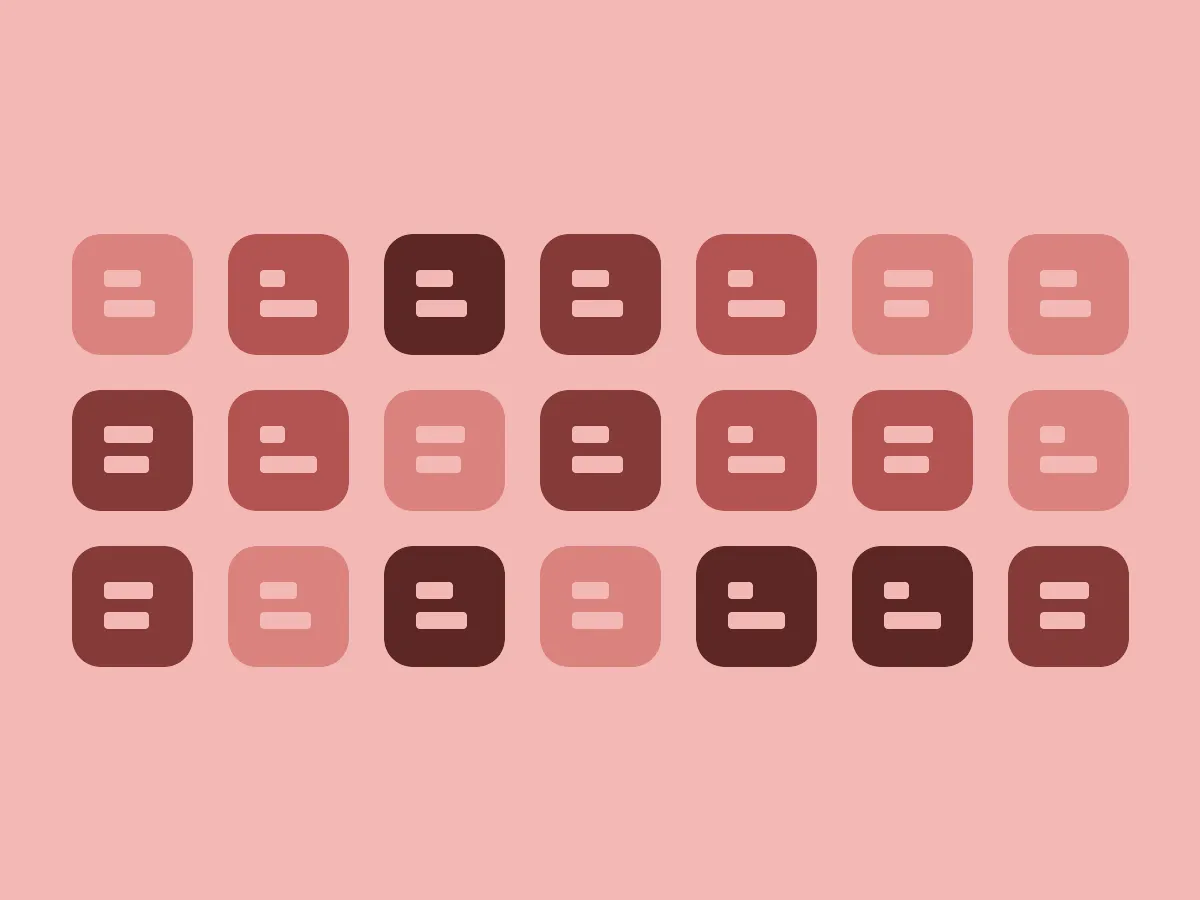
My apps page lists twenty-one things I built in about a year. Two are companies, Bipe and Starlings. Four I make with the Envisioning team: our CRM, Signals, the research hubs and envisioning.com. The rest are small tools for myself, like a clipboard history, a window manager and a tarot reader on a round screen. About 15,000 commits in twelve months, nearly two thirds of them in the two companies.
Claude writes most of the code now. The time goes into everything around it: icon, release, update check, changelog, App Store screenshots, privacy page, link preview. Every app needs all of that, and none of it is the app.
So I treat those parts as a factory: solve each one once, then stop thinking about it.
The repeatable bits
Icons
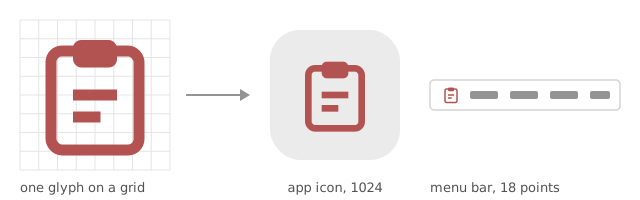
My Mac apps share a package, HouseKit. Each app has one glyph, which HouseKit draws at 18 points for the menu bar and 1024 for the app icon. One command writes the icon file. I haven't opened a design tool for an icon in months.
Settings and About
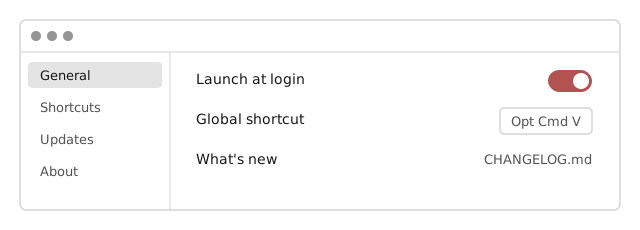
HouseKit also has the settings window, launch at login, global shortcuts and an About pane that shows the changelog bundled in the app. A new menu-bar app gets all of it with one import.
Releases
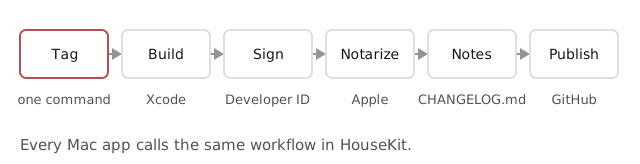
Every Mac app calls one release workflow in HouseKit. It builds, signs, notarizes, takes the notes from CHANGELOG.md and publishes to GitHub Releases. One command cuts a version.
Updates
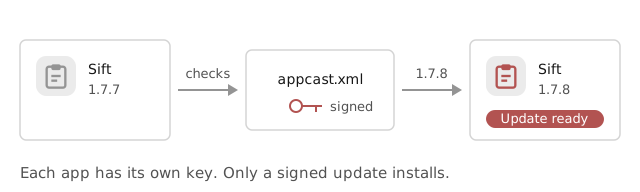
Every Mac app updates through Sparkle. The release workflow signs each update with that app's own key and writes the feed the app checks. Sift 1.7.8 was the first release through it, the same day I set it up.
The App Store
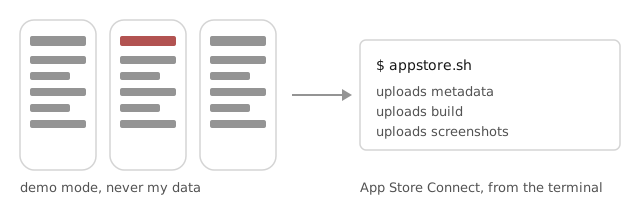
A script pushes metadata, builds and screenshots to App Store Connect from the terminal. Screenshots come from the app in demo mode, never from my own data.
Pages
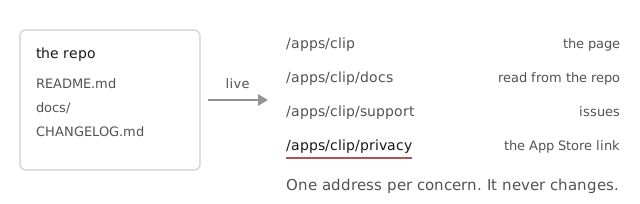
Each app gets a page on this site with docs read live from its repo, a support page and a privacy policy. The App Store listing points at an address that never changes, whatever the repo does.
Agent docs
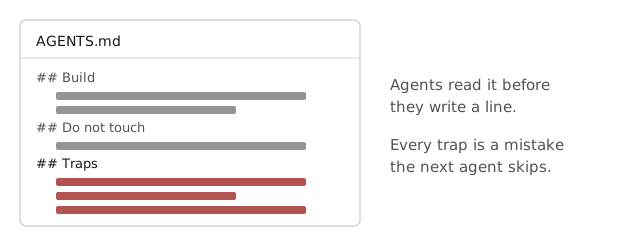
Each repo has an AGENTS.md: how to build, what not to touch, and the traps someone already fell into. Agents read it before they write code. Each trap I write down is one the next agent avoids.
A build machine
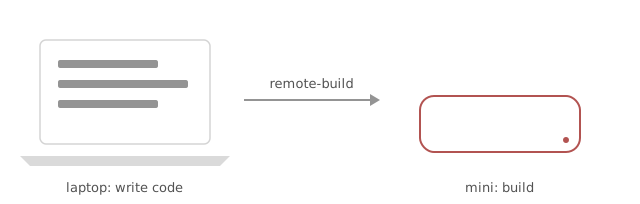
Builds run on a Mac mini. When three agents built on my laptop at once, the load went past 100 and I couldn't type.
What I learned
Build first, extract later
The settings window started inside Clip. The shortcut recorder started in Tessellate. Both moved into HouseKit only when a second app needed them. My card game EST went the same way: its engine became a kit for two more games. Had I designed the kit first, I would have put the wrong things in it.
Copy until it hurts
HouseKit's README used to say: copy Clip's project and release files. Six repos ended up with the same workflow and a different name pasted in. By the sixth I was fixing one bug in six places. Now the workflow lives in HouseKit and each app calls it in a few lines.
One app leads
Headroom has a hundred releases, real tests and a long AGENTS.md. When Sift needed a changelog script, the agent ported Headroom's. The other apps copy from it, so they don't drift apart.
Write decisions down
My apps updated themselves three different ways. Headroom had written down why it skipped Sparkle; Septena had picked Sparkle anyway. With both reasons on paper, the call took minutes: Sparkle everywhere except Headroom, whose background helper runs from inside the app bundle that Sparkle replaces. That exception is written down too.
Hardware doesn't forgive
On my desk radio, Lofi Air, a wrong pin number killed a board. That repo's AGENTS.md describes how the day was lost. Every project I have now carries the rule: never guess a pin.
Most apps get finished
After launch, most of the small apps got twenty or thirty commits, then nothing. A clipboard history needs to keep working, not a roadmap. The apps page now marks each app active or finished.
TinySuite was nine small editors for CSV, JSON, Markdown and other plain files. In eight months they had 75 downloads, and their builds had been broken for weeks without anyone noticing. Bringing them up to standard meant nine keys, nine pipelines and nine changelogs for apps nobody used, including me. I archived them. Most of what is in this post, I learned building them.
Still open
One day of agents going through every repo got me an AGENTS.md everywhere, changelogs, one release workflow and one updater. Still left: screenshots are made three different ways, a few apps need signing secrets before their first release, some repos have no tests, and Septena's Mac app has never shipped. When that list is done, a new app starts with all of this in place.