I spend most of my day with coding agents: Claude Code, Codex, Cursor. Each one has its own limits, with session windows and weekly caps, and each hides them on a different billing page. I kept hitting a wall in the middle of something. Or I held back for no reason, because I couldn't tell how much I had left.
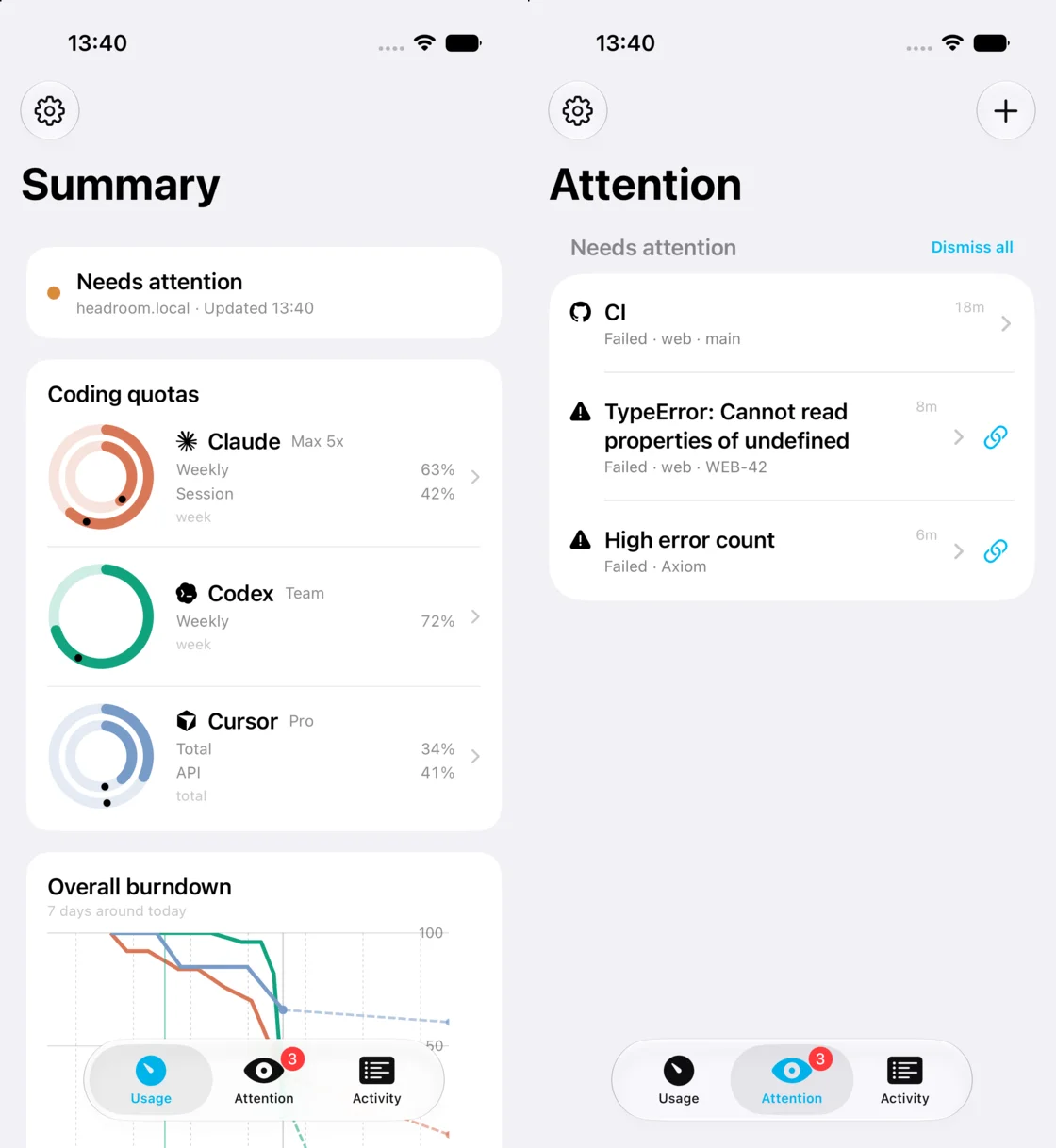
Headroom is the tool I built for myself. It shows how much quota is left on every coding tool I use, how fast I'm burning through it this week, and whether anything I shipped needs me: a failed GitHub Action, a broken deploy, a monitor in the red.
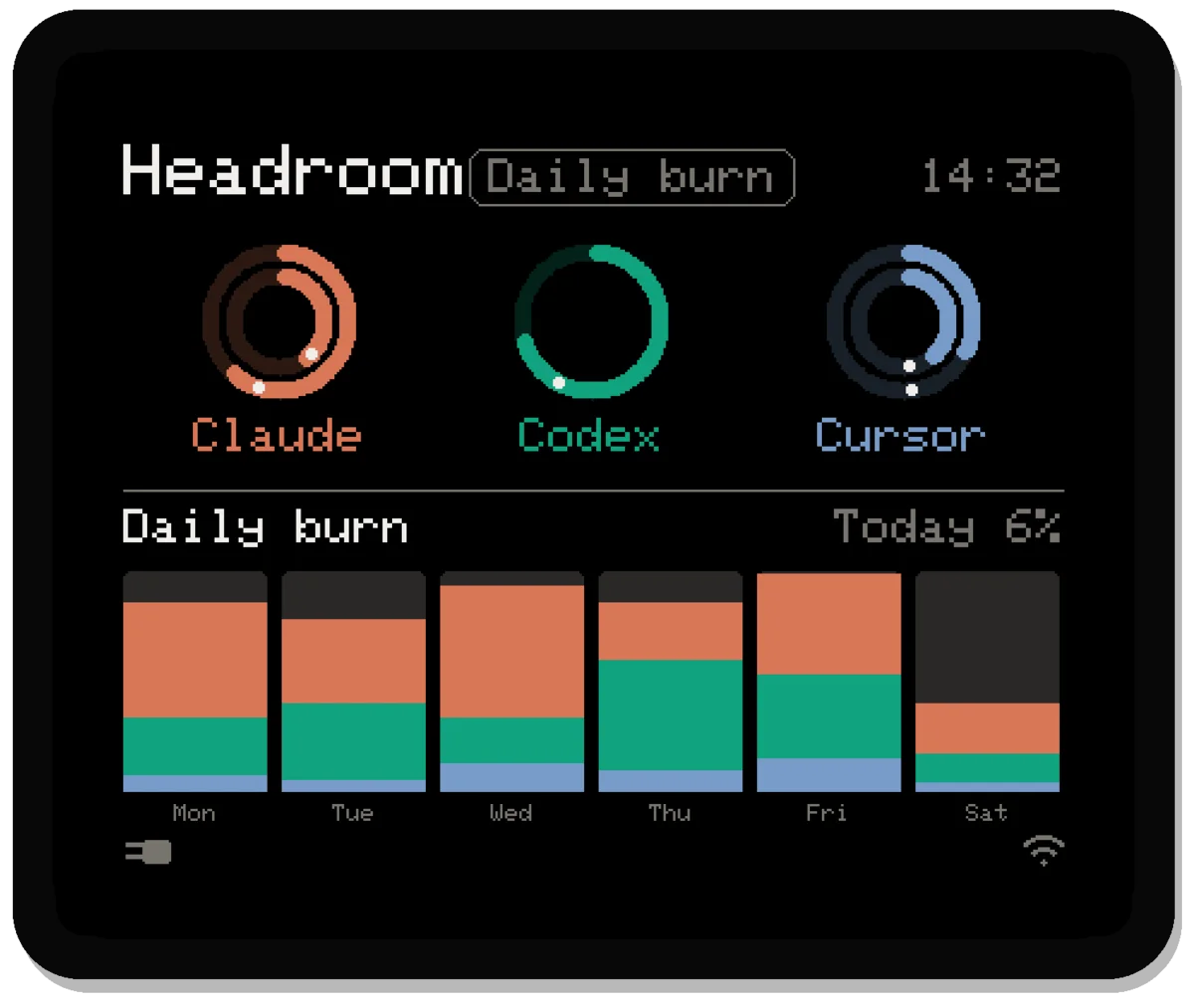
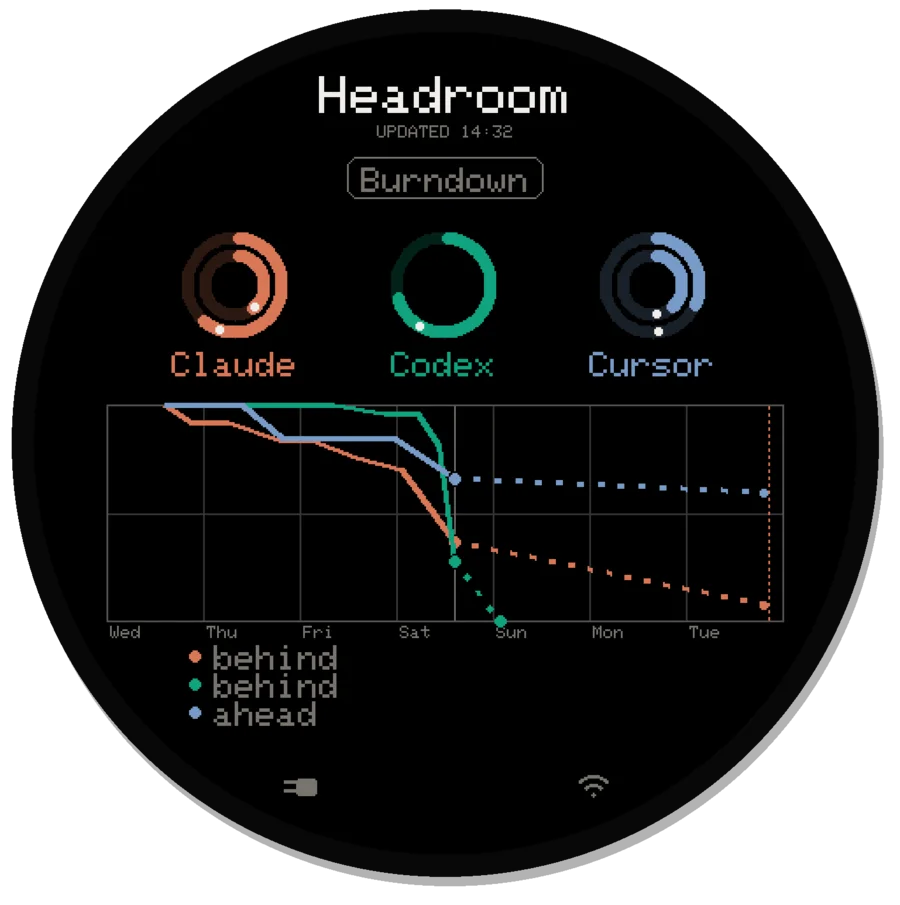
The part people noticed is the desk display. It's a Waveshare ESP32 with a 1.8-inch AMOLED touchscreen that costs about €40, showing three rings and a daily burn chart in pixel type. It sits next to my keyboard, and I look at it more than at any other screen. When I posted it on Threads, the two posts got about 130,000 views, and most of the replies asked where to buy the board. The firmware also runs on a 2.16-inch square panel and a 1.75-inch round one, where every band of the layout is sized to the part of the circle it fills.
How it works
Headroom is local-first. A small Python program on my Mac reads the logins and command-line tools that are already there, and serves one feed of numbers. The menu bar app, the iPhone app, the Apple Watch complications and the desk board all read that same feed. There is no Headroom account and no cloud, so the tokens never leave the machine. When hotel Wi-Fi stops the board from finding the Mac, it falls back to USB.
It reads Claude, Codex, Cursor, Copilot, Gemini, Windsurf, Zed, JetBrains and Amp, and for ship status it watches GitHub, Vercel and a few other services.
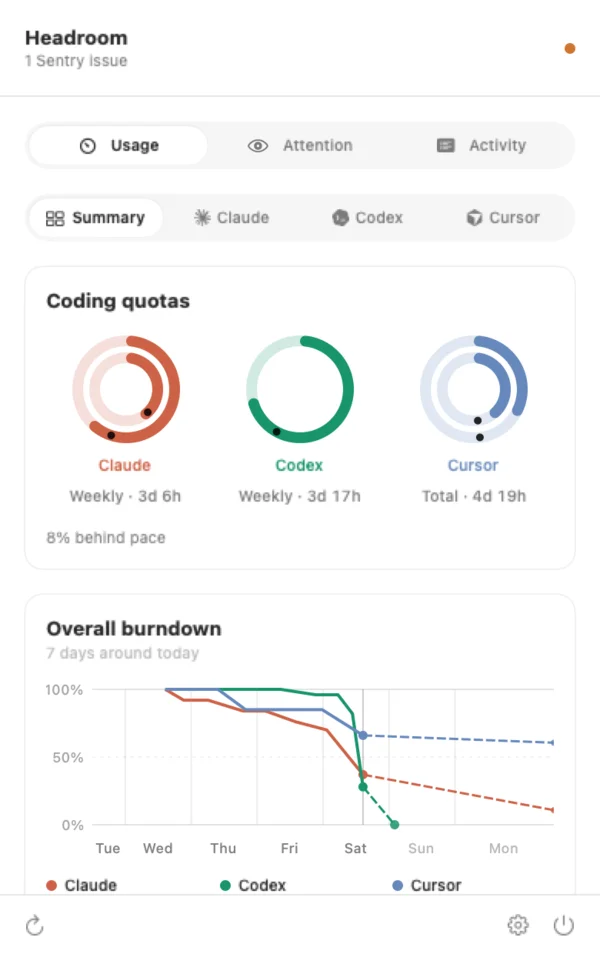
On the iPhone, the Attention tab lets me approve, deny or answer a coding agent's question when I'm away from my desk. Headroom only answers. It never starts work on its own.
Open source
Headroom is MIT-licensed. Since July it has gathered 266 stars and 18 forks, and it's on version 2.2.8 after more than 600 commits. I built it the way I build everything now, with agents. So it's a tool for watching the agents, built by the agents.
The code, the Mac release and the board firmware are at github.com/michellzappa/headroom. Pull requests are welcome.