In 2024 I kept meeting smart people who had stopped following the AI conversation. Not because they lacked interest, but because of the words. Transformers, embeddings, RLHF, diffusion, quantization. Every week brought new terms, and nobody explained the old ones.
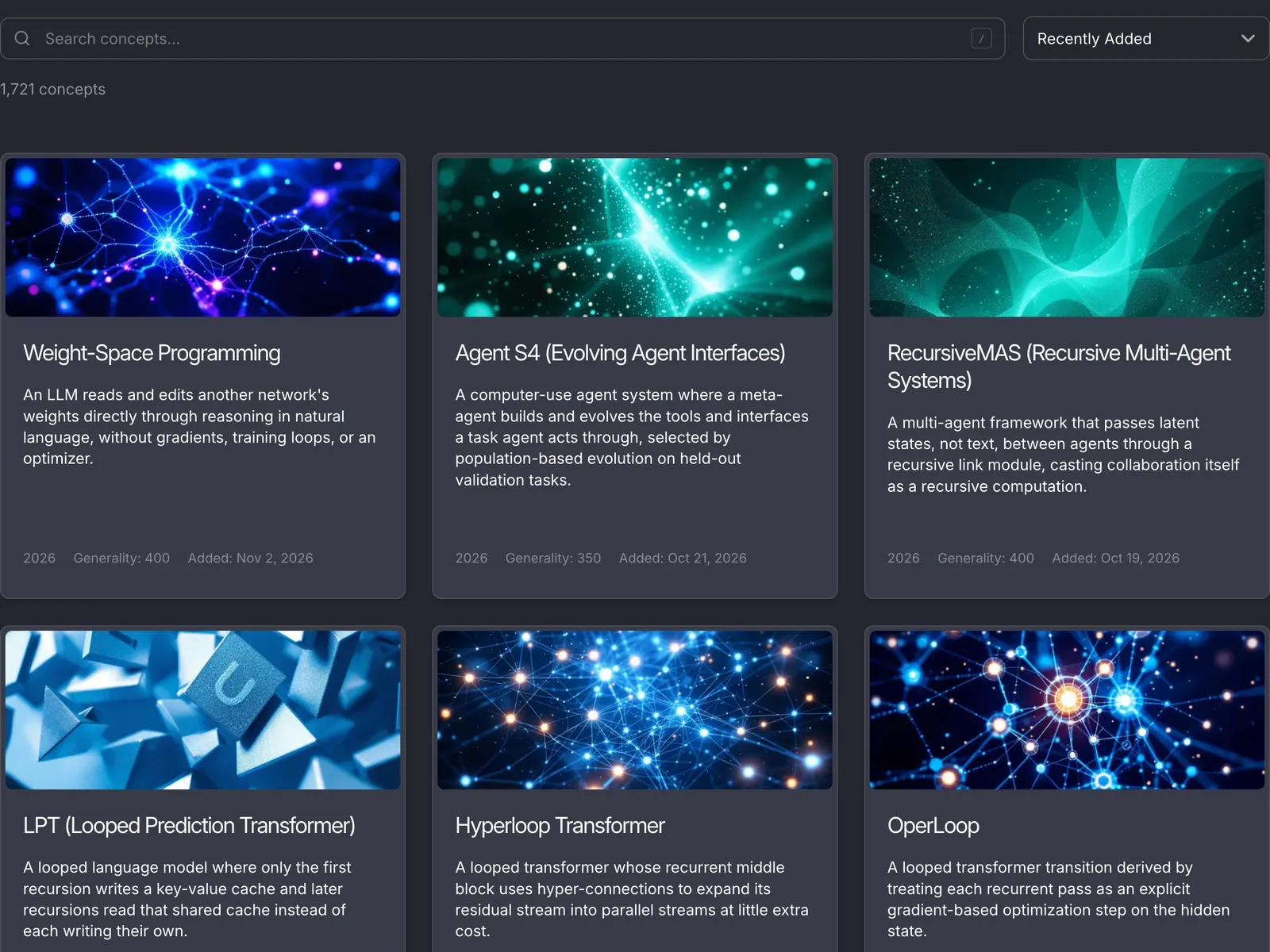
Vocab is a glossary for that problem, built as a graph. It now covers more than 1,700 concepts in machine learning and AI. Each entry explains a term in plain language and links to related terms, so you can start with the basics and work outward.
We made it with the technology it describes. A language model wrote each definition from the term and a style guide. It also scored how general each concept is, several times over, and we show the average. We estimated the year each term first appeared and checked it against the definition. To connect related entries, we compared their texts with a classic method, TF-IDF and cosine similarity. Every entry also got an illustration.
It was an early test of a way of working I now use for everything: let the machine do the volume, and put human attention on the method and the review. If you spot a mistake or a missing concept, write to us.
The best time to learn about AI was ten years ago. The second best time is now.
Explore it at envisioning.com/vocab.