Finding signals of change is the core of foresight work. A signal is an early sign that something is shifting: a new regulation, a strange startup, a lab result, a change in how people behave. For fifteen years we found them the slow way, with analysts reading for weeks.
Signals is the platform we built at Envisioning to do that work with AI. You set a research focus, for example a sector, a region or a question. Signals asks several language models in parallel to propose signals, removes the duplicates, and lays the results out as radars you can read at a glance.
Two choices make it work. First, we ask many models, not one. Each model has its own blind spots and its own training data. When several models independently arrive at the same signal, that agreement is worth knowing. When only one model sees something, that can be the most interesting result, or a mistake.
Second, generation and checking are separate steps. The models propose signals from what they know. A separate verification step then searches the web and checks each signal against real sources, so you can see which ones hold up and which ones a model made up.
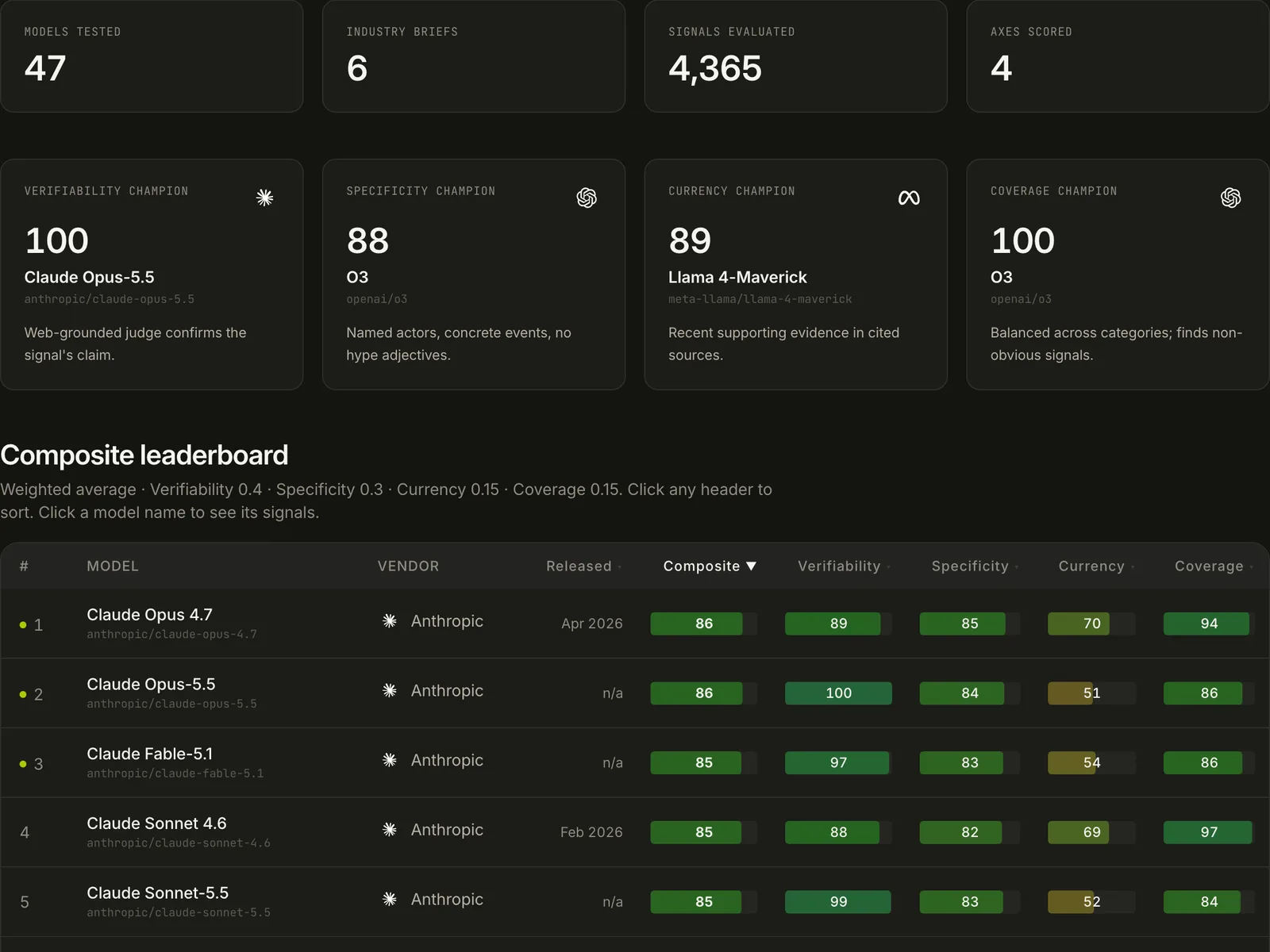
That also gave us a way to compare the models themselves. The Signals Benchmark runs about 25 models on the same research briefs and scores every signal for how verifiable, specific, recent and complete it is.
Signals is the most "work" of my projects: a real product with a team behind it, not a solo build. It is also where I spend the most time as a centaur, pointing models at a question and getting back in an afternoon what used to take weeks.
Try it at signals.envisioning.com.